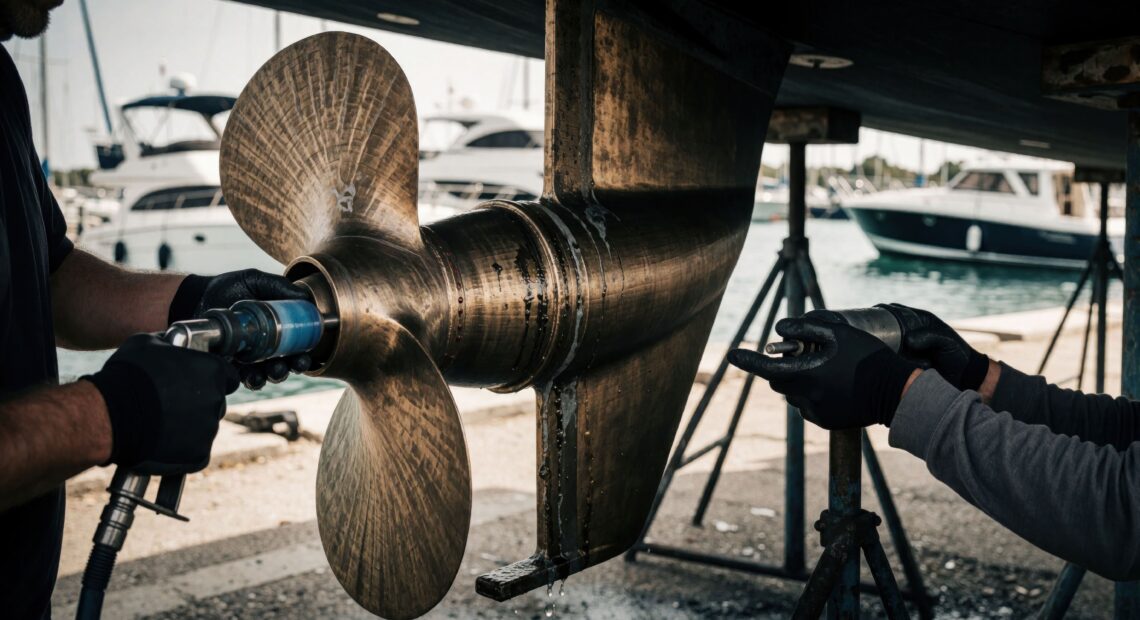
Loss of the Propeller – Is It Possible?
The engine is running properly, we engage the gear, increase the RPM… but the yacht does not move. One possible cause is the loss of the propeller.
This is not a frequent occurrence, but neither is it exceptional. The biggest problem is that, after the fact, it is usually impossible to determine its cause conclusively, while at the same time the incident can lead to dangerous situations.
Why Can a Propeller Come Off?
The propeller may have been incorrectly installed or inadequately secured. The cause may also be wear, corrosion, or damage to one of the fastening components. These are not, however, the only possibilities.
All it takes is an unnoticed impact with a rope, net, piece of wood, or another object under the water. Such an impact does not necessarily cause the propeller to be lost immediately. It may simply loosen it, and the crew may not even notice that anything has happened.
Further loosening may occur later, particularly while manoeuvring, when we shift the drive from forward to reverse and the direction of propeller rotation changes. Ultimately, the propeller may come off in a different place and at a different time from the original impact.
If we are lucky and have the right resources available, it is sometimes possible to find the propeller on the seabed. However, it is not always that simple. Much depends on the type of seabed and on where and when the propeller actually came off. We may have lost it earlier, then switched off the engine and continued sailing, only noticing the lack of propulsion when we started the engine again.
What Are the Consequences?
Losing the propeller means an immediate loss of propulsion despite the engine operating properly. If this happens in open water and under favourable conditions, the problem usually ends with calling for a service technician or a tow.
It is much worse when propulsion is lost while manoeuvring in a harbour, in a narrow passage, or close to shore. The yacht may run aground, collide with another vessel, or be pushed onto rocks. In such a situation, the cost of the propeller itself is the least of the problems.
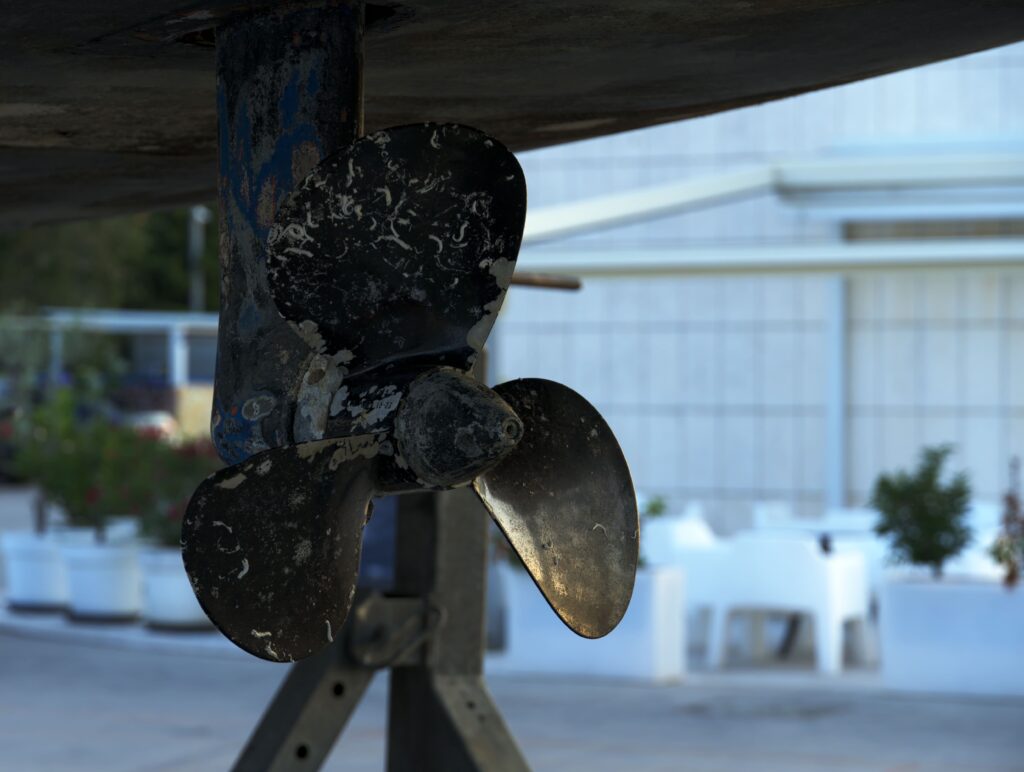
Who Is Responsible for the Loss of the Propeller?
If there is clear evidence of faulty installation or inadequate servicing, the operator may be held responsible. If an impact or a rope becoming wrapped around the propeller during the charter can be confirmed, the cost may be attributed to the charterer.
In practice, however, it is most often impossible to prove either of these scenarios. The propeller cannot be found, and the evidence available after the incident does not make it possible to determine when or why it started to loosen.
For this reason, in most cases the loss of a propeller should be treated as an unforeseen accidental event, rather than automatically as evidence of fault on the part of the operator or skipper. The way the crew responded to the loss of propulsion and any subsequent damage may require a separate assessment, but that is a different issue from the cause of the propeller coming off.
How Can You Protect Yourself?
A skipper has no way of checking the propeller's mounting during a standard yacht handover. Nor is it possible to avoid every object located beneath the surface of the water.
In practice, the only effective protection against the financial consequences of such an incident is appropriate charter deposit insurance. Before taking out a policy, it is worth checking whether it covers the propeller, propulsion system, rudder, and other components of the yacht's underwater section.
Insurance will not prevent a breakdown, but it can help avoid a situation where an incident that is difficult to explain results in the loss of the deposit.
Information about author